The first election of the Universal House of Justice is held, marking its establishment as the supreme governing institution of the Baháʼí Faith.
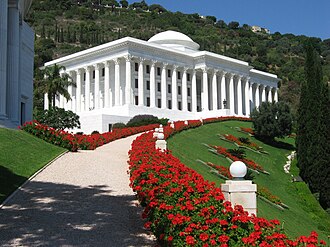
Universal House of Justice
The Universal House of Justice is the nine-member supreme ruling body of the Baháʼí Faith. It was envisioned by Baháʼu'lláh, the founder of the Baháʼí Faith, as an institution that could legislate on issues not already addressed in the Baháʼí writings, providing flexibility for the Baháʼí Faith to adapt to changing conditions. It was first elected in 1963, and subsequently every five years, by delegates consisting of the members of Baháʼí National Spiritual Assemblies throughout the world.
Baháʼí Faith
The Baháʼí Faith is a religion founded in the 19th century that teaches the essential worth of all religions and the unity of all people. Established by Baháʼu'lláh, it initially developed in Iran and parts of the Middle East, where it has faced ongoing persecution since its inception. The religion has 5–8 million adherents spread throughout most of the world's countries and territories.