Filipino natives led by chieftain Lapulapu killed Portuguese explorer Ferdinand Magellan at the Battle of Mactan.
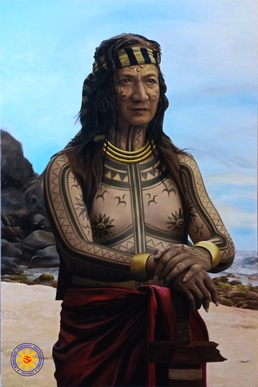
Lapulapu
Lapulapu or Lapu-Lapu, whose name was first recorded as Çilapulapu, was a datu (chief) of Mactan, an island now part of the Philippines. Lapulapu is known for the 1521 Battle of Mactan, where he and his men defeated Spanish forces led by Portuguese explorer Ferdinand Magellan and his native allies Rajah Humabon and Datu Zula. Magellan's death in battle ended his voyage of circumnavigation and delayed the Spanish occupation of the islands by over forty years until the expedition of Miguel López de Legazpi which reached the archipelago in 1565.
Ferdinand Magellan
Ferdinand Magellan was a Portuguese explorer best known for having planned and led the 1519–22 Spanish expedition to the East Indies. During this expedition, he also discovered the Strait of Magellan, allowing his fleet to pass from the Atlantic into the Pacific Ocean and perform the first European navigation to Asia via the Pacific. Magellan was killed in battle in the Philippines and his crew, commanded by the Spanish Juan Sebastián Elcano, completed the return trip to Spain in 1522 achieving the first circumnavigation of Earth in history.
Battle of Mactan
The Battle of Mactan was fought on a beach in Mactan Island between Spanish forces led by the Portuguese explorer Ferdinand Magellan along with local allies, and Lapulapu, the chieftain of the island, on the early morning of April 27, 1521. Magellan, a Portuguese-born commander serving the Spanish Empire who led an expedition that ultimately circumnavigated the world for the first time, commanded a small Spanish contingent in an effort to subdue Mactan under the Spanish crown. The sheer number of Lapulapu's forces, compounded with issues associated with the location and the armor, ultimately resulted in a disastrous defeat for the Europeans and the death of Magellan. Surviving members of Magellan's crew continued the expedition under the command of Juan Sebastian de Elcano, who completed the journey in September 1522.