The Chemical Weapons Convention of 1993 enters into force, outlawing the production, stockpiling and use of chemical weapons by its signatories.
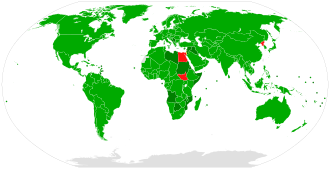
Chemical Weapons Convention
The Chemical Weapons Convention (CWC), officially the Convention on the Prohibition of the Development, Production, Stockpiling and Use of Chemical Weapons and on their Destruction, is an arms control treaty administered by the Organisation for the Prohibition of Chemical Weapons (OPCW), an intergovernmental organization based in The Hague, Netherlands. The treaty entered into force on 29 April 1997. It prohibits the use of chemical weapons, and the large-scale development, production, stockpiling, or transfer of chemical weapons or their precursors, except for very limited purposes. The main obligation of member states under the convention is to effect this prohibition, as well as the destruction of all current chemical weapons. All destruction activities must take place under OPCW verification.
Chemical warfare
Chemical warfare (CW) involves using the toxic properties of chemical substances as weapons. This type of warfare is distinct from nuclear warfare, biological warfare and radiological warfare, which together make up CBRN, the military acronym for chemical, biological, radiological, and nuclear, all of which are considered "weapons of mass destruction" (WMDs), a term that contrasts with conventional weapons.
April 29
April 29 is the 119th day of the year in the Gregorian calendar; 246 days remain until the end of the year.