The North Korean satellite Kwangmyŏngsŏng-2 was launched from the Tonghae Satellite Launching Ground and passed over Japan, sparking concerns it may have been a trial run of technology that could be used to launch intercontinental ballistic missiles.
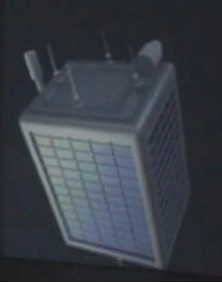
Kwangmyŏngsŏng-2
Kwangmyŏngsŏng-2 was a satellite launched by North Korea on April 5, 2009.
Tonghae Satellite Launching Ground
The Tonghae Satellite Launching Ground (Korean: 동해위성발사장), also known as Musudan-ri (무수단리), is a rocket launching site in North Korea.
Intercontinental ballistic missile
An intercontinental ballistic missile (ICBM) is a ballistic missile with a range greater than 5,500 kilometres (3,400 mi), primarily designed for nuclear weapons delivery. Conventional, chemical, and biological weapons can also be delivered with varying effectiveness but have never been deployed on ICBMs. Most modern designs support multiple independently targetable reentry vehicles (MIRVs), allowing a single missile to carry several warheads, each of which can strike a different target. The United States, Russia, China, France, India, the United Kingdom, Israel, and North Korea are the only countries known to have operational ICBMs. Pakistan is the only nuclear-armed state that does not possess ICBMs.