Percy Williams Bridgman, American physicist and academic, Nobel Prize laureate (born 1882)
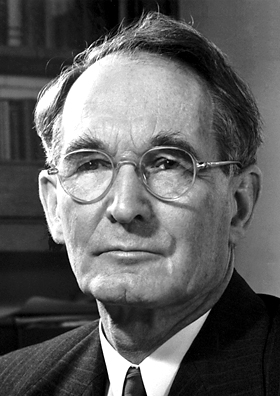
Percy Williams Bridgman
Percy Williams Bridgman was an American physicist who received the Nobel Prize in Physics in 1946 for his work on the physics of high pressures. He also wrote extensively on the scientific method and on other aspects of the philosophy of science. The Bridgman effect, the Bridgman–Stockbarger technique, and the high-pressure mineral bridgmanite are named after him.
Nobel Prize in Physics
The Nobel Prize in Physics is an annual award given by the Royal Swedish Academy of Sciences for those who have made the most outstanding contributions to mankind in the field of physics. It is one of the five Nobel Prizes established by the will of Alfred Nobel in 1895 and awarded since 1901, the others being the Nobel Prize in Chemistry, Nobel Prize in Literature, Nobel Peace Prize, and Nobel Prize in Physiology or Medicine. Physics is traditionally the first award presented in the Nobel Prize ceremony.