selected
Amid an outbreak of bovine spongiform encephalopathy, the British government banned the sale of beef on the bone for human consumption.
Related Wikipedia articles
United Kingdom BSE outbreak
Mad cow disease outbreak in the 1980s and 90s
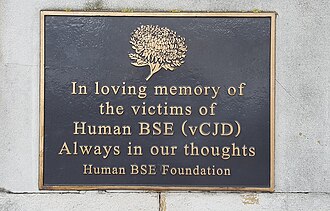
The United Kingdom was afflicted with an outbreak of bovine spongiform encephalopathy, and its human equivalent variant Creutzfeldt–Jakob disease (vCJD), in the 1980s and 1990s. Over four million head of cattle were slaughtered in an effort to contain the outbreak, and 178…Source: Wikipedia (CC BY-SA)
Bovine spongiform encephalopathy
Fatal neurodegenerative disease of cattle
Bovine spongiform encephalopathy (BSE), commonly known as mad cow disease, is an incurable and always fatal neurodegenerative disease of cattle. Symptoms include abnormal behavior, trouble walking, and weight loss. Later in the course of the disease, the cow becomes unable to…Source: Wikipedia (CC BY-SA)
Beef Bones Regulations 1997
United Kingdom legislation
The Beef Bones Regulations 1997 was a statutory instrument of the British government that limited the sale of beef on the bone. The regulations were implemented as a response to the United Kingdom BSE outbreak over fears that variant Creutzfeldt–Jakob disease in humans might be…Source: Wikipedia (CC BY-SA)
Meat on the bone
Non-filleted meat in culinary context
Meat on the bone or bone-in meat is meat that is sold with some or all of the bones included in the cut or portion, i.e. meat that has not been filleted. The phrase "on the bone" can also be applied to specific types of meat, most commonly ham on the bone, and to fish. Meat or…Source: Wikipedia (CC BY-SA)