Edwin G. Krebs, American biochemist and academic, Nobel Prize laureate (born 1918)
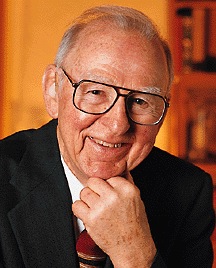
Edwin G. Krebs
Edwin Gerhard Krebs was an American biochemist. He received the Albert Lasker Award for Basic Medical Research and the Louisa Gross Horwitz Prize of Columbia University in 1989 together with Alfred Gilman and, together with his collaborator Edmond H. Fischer, was awarded the Nobel Prize in Physiology or Medicine in 1992 for describing how reversible phosphorylation works as a switch to activate proteins and regulate various cellular processes.
Nobel Prize in Physiology or Medicine
The Nobel Prize in Physiology or Medicine is awarded yearly by the Nobel Assembly at the Karolinska Institute for outstanding discoveries in physiology or medicine. The Nobel Prize is not a single prize, but five separate prizes that, according to Alfred Nobel's 1895 will, are awarded "to those who, during the preceding year, have conferred the greatest benefit to humankind". Nobel Prizes are awarded in the fields of Physics, Medicine or Physiology, Chemistry, Literature, and Peace.