An agreement is made for the Kingdom of Nepal to be abolished and the country to become a federal republic with the Prime Minister becoming head of state.
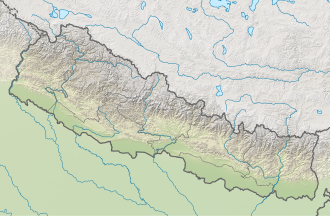
Kingdom of Nepal
The Kingdom of Nepal was a Hindu kingdom in South Asia, formed in 1768 by the expansion of the Gorkha Kingdom, which lasted until 2008 when the kingdom became the Federal Democratic Republic of Nepal. It was also known as the Gorkha Empire, or sometimes Asal Hindustan. Founded by King Prithvi Narayan Shah, a Gorkha monarch who claimed to be of Thakuri origin from chaubisi
Federal republic
A federal republic is a federation of states with a republican form of government. At its core, the literal meaning of the word republic when used to reference a form of government means a country that is governed by elected representatives and by an elected leader, such as a president, rather than by a monarch or any hereditary aristocracy.
List of prime ministers of Nepal
The position of the Prime Minister of Nepal in modern form was called by different names at different times of Nepalese history. During the reign of the Shah kings, the Mulkajis or Chautariyas served as prime ministers in a council of 4 Chautariyas, 4 Kajis, and sundry officers. These Bharadars (officers) were drawn from high caste and politically influential families such as the Pande, Basnyat, and Thapa families. The nobility of Gorkha was mainly based from Chhetri families and they had a strong presence in civil administration affairs. All prime ministers of Nepal between 1768 and 1950 were Chhetris with the exception of Ranga Nath Poudyal, being a Khas Brahmin. Of the 23 men who have been elected since Nepal attained democracy from the Ranas in 1951, 15 have been Khas Brahmin, 3 Thakuri, 2 Newar Shresthas, 2 Chhetri, and 1 Sanyasi/Dasnami. The executive power allocation was fluctuating between Kajis and Chautariyas.