Gerald Lankester Harding and Roland de Vaux begin excavations at Cave 1 of the Qumran Caves, where they will eventually discover the first seven Dead Sea Scrolls.
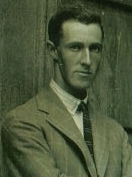
Gerald Lankester Harding
Gerald Lankester Harding CBE was a British archaeologist who was the director of the Department of Antiquities of Jordan from 1936 to 1956. His tenure spanned the period in which the Dead Sea Scrolls were discovered and brought to public awareness. Without his efforts many of the scrolls might have disappeared into private collections never to be seen again.
Roland de Vaux
Roland Guérin de Vaux was a French Dominican priest who led the Catholic team that initially worked on the Dead Sea Scrolls. He was the director of the École Biblique, a French Catholic Theological School in East Jerusalem, and he was charged with overseeing research on the scrolls. His team excavated the ancient site of Khirbet Qumran (1951–1956) as well as several caves near Qumran northwest of the Dead Sea. The excavations were led by Ibrahim El-Assouli, caretaker of the Palestine Archaeological Museum, or what came to be known as the Rockefeller Museum in Jerusalem.
Qumran Caves
The Qumran Caves are a series of caves, both natural and artificial, found around the archaeological site of Qumran in the Judaean Desert. It is in these caves that the Dead Sea Scrolls were discovered.
Dead Sea Scrolls
The Dead Sea Scrolls, in the narrow sense identical with the Qumran Caves Scrolls, are a set of ancient Jewish manuscripts from the Second Temple period. They were discovered over a period of ten years, between 1946 and 1956, at the Qumran Caves near Ein Feshkha in the West Bank, on the northern shore of the Dead Sea. Dating from the 3rd century BCE to the 1st century CE, the Dead Sea Scrolls include the oldest surviving manuscripts of entire books later included in the biblical canons, including deuterocanonical manuscripts from late Second Temple Judaism and extrabiblical books. At the same time, they cast new light on the emergence of Christianity and of Rabbinic Judaism. In the wider sense, the Dead Sea Scrolls also include similar findings from elsewhere in the Judaean Desert, of which some are from later centuries. Almost all of the 15,000 scrolls and scroll fragments are held in the Shrine of the Book at the Israel Museum located in Jerusalem.