Bavarian socialist Kurt Eisner, who had organized the German Revolution that overthrew the Wittelsbach monarchy and established Bavaria as a republic, was assassinated.
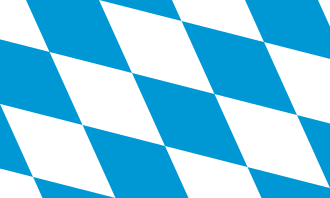
Bavaria
Bavaria, officially the Free State of Bavaria, is a state in the southeast of Germany. With an area of 70,550.19 km2 (27,239.58 sq mi), it is the largest German state by land area, comprising approximately 1/5 of the total land area of Germany, and with over 13.08 million inhabitants, it is the second most populous German state, behind only North Rhine-Westphalia; however, due to its large land area, its population density is below the German average. Major cities include Munich, Nuremberg, and Augsburg.
Kurt Eisner
Kurt Eisner was a German politician, revolutionary, journalist, and theatre critic. As a socialist journalist, he organized the socialist revolution that overthrew the Wittelsbach monarchy in Bavaria in November 1918, which led to him being described as "the symbol of the Bavarian revolution". He is used as an example of charismatic authority by Max Weber. Eisner subsequently proclaimed the People's State of Bavaria but was assassinated by far-right German nationalist Anton Graf von Arco auf Valley in Munich on 21 February 1919.
German revolution of 1918–1919
The German revolution of 1918–1919, also known as the November Revolution, was an uprising started by workers and soldiers in the final days of World War I. It quickly and almost bloodlessly brought down the German Empire, then, in its more violent second stage, the supporters of a parliamentary republic were victorious over those who wanted a Soviet-style council republic. The defeat of the forces of the far left cleared the way for the establishment of the Weimar Republic. The key factors leading to the revolution were the extreme burdens suffered by the German people during the war, the economic and psychological impacts of the Empire's defeat, and the social tensions between the general populace and the aristocratic and bourgeois elite.
House of Wittelsbach
The House of Wittelsbach is a former Bavarian dynasty, with branches that have ruled over territories including the Electorate of Bavaria, the Electoral Palatinate, the Electorate of Cologne, Holland, Zeeland, Sweden, Denmark, Norway, Hungary, Bohemia, and Greece. Their ancestral lands of Bavaria and the Palatinate were prince-electorates, and the family had three of its members elected emperors and kings of the Holy Roman Empire. They ruled over the Kingdom of Bavaria which was created in 1805 and continued to exist until 1918.