Cuban Revolution: Fulgencio Batista, dictator of Cuba, is overthrown by Fidel Castro's forces.
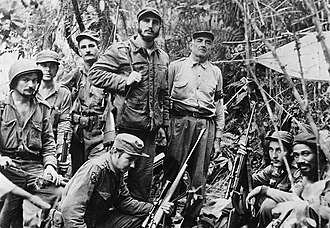
The Cuban Revolution: A Defining Moment in Latin American History
The Cuban Revolution was a pivotal military and political movement that dramatically reshaped the course of Cuba’s history. It successfully overthrew the dictatorship of Fulgencio Batista, who had ruled Cuba with an iron fist from 1952 until 1959. This revolution was not just a sudden uprising but the culmination of growing discontent following Batista’s 1952 coup d'état, which abruptly ended Cuba’s budding democracy and concentrated power in his hands.
Among the earliest and most determined opponents of Batista’s regime was Fidel Castro, a young lawyer at the time. Initially, Castro sought to challenge the coup through legal channels within the Cuban courts, hoping to restore democratic order without violence. However, when these peaceful efforts were systematically blocked, he realized that armed resistance was the only viable path forward.
On July 26, 1953, Fidel Castro, alongside his brother Raúl and a small group of revolutionaries, launched a daring assault on the Moncada Barracks, a key military installation in Santiago de Cuba. Although the attack was ultimately unsuccessful and many rebels were captured or killed, it marked the symbolic beginning of the Cuban Revolution. This event galvanized opposition forces and set the stage for a prolonged struggle that would eventually topple Batista’s regime six years later.
Why the Cuban Revolution Matters
The Cuban Revolution is significant not only for its immediate political impact but also for its lasting influence on global geopolitics and Latin American social movements. It inspired a wave of revolutionary fervor across the region, challenging imperialism and authoritarianism. The revolution also led to profound social reforms in Cuba, including land redistribution, improvements in education and healthcare, and the establishment of a socialist state under Fidel Castro’s leadership.
Moreover, the revolution dramatically altered Cuba’s relationship with the United States and the Soviet Union, becoming a focal point of Cold War tensions. The ripple effects of this movement continue to be felt today, influencing debates on sovereignty, social justice, and international relations.
Humanizing the Revolution: The People Behind the Movement
Beyond the political and military strategies, the Cuban Revolution was driven by the hopes, struggles, and sacrifices of ordinary Cubans. Farmers, students, workers, and intellectuals all played vital roles in supporting the revolutionary cause. Fidel and Raúl Castro’s leadership was marked by their ability to connect with these diverse groups, uniting them under a common vision of freedom and equality.
The revolution’s story is one of resilience and determination—a testament to how a small group of committed individuals can challenge entrenched power structures and ignite profound change. It reminds us that history is shaped not only by leaders but by the collective will of people striving for a better future.
Legacy and Lessons of the Cuban Revolution
Today, the Cuban Revolution remains a subject of intense study and debate. It offers valuable lessons on the complexities of revolutionary change, the challenges of governance after upheaval, and the enduring quest for social justice. Whether viewed as a heroic struggle for liberation or a controversial chapter in Cold War history, the revolution’s impact is undeniable.
Understanding the Cuban Revolution helps us appreciate the dynamics of political power, the role of grassroots activism, and the importance of perseverance in the face of adversity. It continues to inspire activists and scholars worldwide, reminding us that the fight for justice often requires courage, sacrifice, and unwavering commitment.
Fulgencio Batista y Zaldívar: Cuba's Controversial Military Leader and Dictator
Fulgencio Batista y Zaldívar was a pivotal figure in 20th-century Cuban history, known both for his military prowess and his authoritarian rule. Rising from military officer to the highest seat of power, Batista’s influence shaped Cuba’s political landscape for over two decades, from the 1930s until his dramatic ousting in 1959 during the Cuban Revolution.
Batista first came to prominence in Cuban politics as a military leader during the turbulent years following the collapse of Gerardo Machado’s regime. He initially served as the chief of staff of the Cuban army and then became the de facto ruler after a 1933 coup. His political career formally advanced when he was elected president for the first time, serving from 1940 to 1944. During this period, he implemented a progressive constitution that included labor reforms and expanded civil liberties, which earned him some popular support.
However, Batista’s legacy is most often associated with his second presidency, from 1952 to 1959, when he seized power again through a military coup. This era was marked by authoritarianism, political repression, and widespread corruption. Batista’s government was characterized by close ties to the United States, particularly with American business interests and organized crime figures, which fueled public discontent. His regime's oppressive tactics against political opponents and censorship of the press intensified opposition movements, setting the stage for revolutionary fervor.
The Cuban Revolution, led by Fidel Castro and his allies, ultimately toppled Batista’s government in January 1959, forcing him into exile. Batista fled first to the Dominican Republic and later to Spain, where he lived until his death in 1973.
Batista’s complex legacy continues to be debated by historians. Some credit him with modernizing Cuba’s infrastructure and maintaining stability during turbulent times, while others condemn his dictatorship for the human rights abuses and social inequalities that triggered the revolutionary uprising. Understanding Batista’s role is essential to grasping the broader historical context of Cuba’s transition from a U.S.-influenced republic to a socialist state under Castro.
Discovering Cuba: The Jewel of the Caribbean
Cuba, officially known as the Republic of Cuba, is a captivating island nation nestled in the heart of the Caribbean. This vibrant country is not just a single island but a stunning archipelago that includes the main island of Cuba, the Isla de la Juventud, and an impressive 4,195 smaller islands, islets, and cays scattered around its shores. Its unique geographic position marks the meeting point of the northern Caribbean Sea, the Gulf of Mexico, and the Atlantic Ocean, making it a strategic and scenic maritime crossroads.
Geographical Location and Neighbors
Situated east of Mexico’s Yucatán Peninsula, Cuba lies south of Florida and the Bahamas, west of Hispaniola (home to Haiti and the Dominican Republic), and north of Jamaica and the Cayman Islands. This prime location has historically made Cuba a cultural and economic hub in the Caribbean region. The country’s diverse coastline stretches over 3,700 kilometers, featuring pristine beaches, lush mangroves, and vibrant coral reefs that attract tourists and marine enthusiasts alike.
Population and Urban Life
With a population of approximately 10 million people, Cuba ranks as the third-most populous country in the Caribbean, following Haiti and the Dominican Republic. Havana, the capital and largest city, is a bustling metropolis rich in history, culture, and architecture. It serves as the political, economic, and cultural heart of the nation, offering a blend of colonial charm and modern vibrancy. Beyond Havana, Cuba’s cities and towns showcase a unique fusion of Afro-Caribbean traditions, Spanish colonial heritage, and revolutionary spirit.
The Largest Caribbean Island by Area
Cuba holds the distinction of being the largest island country in the Caribbean by land area. Its vast landscapes range from fertile plains and rolling hills to mountainous regions like the Sierra Maestra, which played a significant role in Cuba’s revolutionary history. This diversity in terrain supports a wide variety of ecosystems and agricultural activities, including the cultivation of sugarcane, tobacco, and coffee, which are vital to the Cuban economy.
Cultural Richness and Tourism
Cuba’s rich cultural tapestry is woven from its indigenous roots, Spanish colonial past, African influences, and revolutionary history. This blend is evident in its music, dance, cuisine, and festivals, making it a vibrant destination for travelers seeking authentic experiences. The island’s UNESCO World Heritage sites, such as Old Havana and the Viñales Valley, attract millions of visitors annually, eager to explore its historic streets, natural beauty, and warm hospitality.
Why Cuba Matters Today
Beyond its natural beauty and cultural wealth, Cuba plays a significant role in regional politics, international relations, and global discussions on healthcare and education. Known for its robust healthcare system and high literacy rates, Cuba often serves as a model for social development in the Global South. Its ongoing journey of economic reforms and opening to tourism continues to shape its future, making it a fascinating country to watch in the coming years.
Whether you are drawn by its stunning landscapes, rich history, or vibrant culture, Cuba offers an unforgettable experience that captures the essence of the Caribbean spirit.
Fidel Alejandro Castro Ruz: A Transformative Leader in Cuban History
Fidel Alejandro Castro Ruz was a prominent Cuban politician and revolutionary who shaped the course of Cuba’s history for nearly five decades. Serving as Cuba's prime minister from 1959 to 1976 and then as president from 1976 to 2008, Castro was a central figure in global Cold War politics and Latin American affairs. His leadership marked a defining era for Cuba, characterized by profound political, economic, and social transformations.
A committed Marxist–Leninist and passionate Cuban nationalist, Castro also held the powerful role of first secretary of the Communist Party of Cuba from its inception in 1965 until 2011. Under his administration, Cuba transitioned into a one-party communist state, where private industry and businesses were nationalized, and wide-ranging socialist reforms were implemented to reshape Cuban society.
Castro’s government focused heavily on improving literacy rates, healthcare access, and education, making notable advances that earned international recognition despite enduring economic challenges linked to trade embargoes and geopolitical isolation. His revolutionary ideals and defiance against U.S. influence made him a controversial yet iconic figure on the world stage.
Beyond his domestic policies, Fidel Castro played a significant role in supporting revolutionary movements across Latin America and Africa, promoting anti-imperialist ideologies and forging alliances with other socialist countries.
His leadership legacy continues to influence Cuba’s political landscape and remains a subject of extensive analysis and debate among historians, political scientists, and global observers.
January 1: The Start of a New Year
January 1 marks the very first day of the calendar year in the widely used Gregorian calendar. It is a significant date celebrated globally as **New Year's Day**, symbolizing fresh beginnings and new opportunities. On this day, 364 days remain until the year concludes, making it a pivotal moment for reflection on the past year and setting goals for the year ahead.
The Significance of New Year's Day
New Year's Day is more than just a date on the calendar; it carries deep cultural, social, and historical importance. Around the world, people celebrate with various traditions such as fireworks, countdowns, and resolutions aimed at self-improvement. This day serves as a universal marker of time, encouraging individuals and communities to embrace change and renewal.
Why January 1? The History Behind the Date
The choice of January 1 as the start of the year dates back to ancient Rome. The month of January is named after Janus, the Roman god of doors and beginnings, who looks both backward and forward. The Gregorian calendar, introduced by Pope Gregory XIII in 1582, standardized January 1 as the official start of the year to align the calendar more closely with the solar year.
How People Celebrate New Year's Day
Celebrations vary widely across cultures but often include festive gatherings, special meals, and symbolic rituals. Many people make **New Year's resolutions**, pledging to improve aspects of their lives such as health, finances, or relationships. Public events like parades, concerts, and fireworks displays are common, creating a shared sense of joy and optimism.
SEO Tips for Content About January 1 and New Year's Day
When creating content about January 1 or New Year's Day, it’s important to use clear and descriptive headings to improve readability and SEO. Using header tags like `
` for main sections helps search engines understand the structure and relevance of your content. Incorporate keywords naturally, such as "New Year's Day," "January 1," and "start of the year," to attract users searching for information about this important date.
Final Thoughts
January 1 is a day that unites people worldwide in celebration and hope. Whether you view it as a time for reflection, renewal, or simply a fresh start, it holds a special place in the calendar year. Embracing the spirit of New Year's Day can inspire positive change and set the tone for a successful year ahead.
Related Wikipedia articles
Cuban Revolution
1955–58 armed rebellion against the Cuban government led by Fidel Castro
The Cuban Revolution was the military and political movement that overthrew the dictatorship of Fulgencio Batista, who had ruled Cuba from 1952 to 1959. The revolution began after the 1952 Cuban coup d'état, in which Batista overthrew the emerging Cuban democracy and…Source: Wikipedia (CC BY-SA)
Fulgencio Batista
Cuban politician (1901–1973)
Fulgencio Batista y Zaldívar was a Cuban military officer and dictator who played a dominant role in Cuban politics from his initial rise to power in the 1930s until his overthrow in the Cuban Revolution in 1959. He served as president of Cuba from 1940 to 1944, and again from…Source: Wikipedia (CC BY-SA)
Cuba
Island country in the Caribbean
Cuba, officially the Republic of Cuba, is an island country in the Caribbean, comprising the island of Cuba, Isla de la Juventud, and 4,195 islands, islets and cays surrounding the main island. It is located where the northern Caribbean Sea, Gulf of Mexico, and Atlantic Ocean…Source: Wikipedia (CC BY-SA)
Fidel Castro
Leader of Cuba from 1959 to 2008
Fidel Alejandro Castro Ruz was a Cuban politician and revolutionary who was the leader of Cuba from 1959 to 2008, serving as the prime minister of Cuba from 1959 to 1976 and president from 1976 to 2008. Ideologically a Marxist–Leninist and Cuban nationalist, he also served as…Source: Wikipedia (CC BY-SA)
January 1
Day of the year
January 1 is the first day of the calendar year in the Gregorian Calendar; 364 days remain until the end of the year. This day is also known as New Year's Day since the day marks the beginning of the year.Source: Wikipedia (CC BY-SA)