The Draupner wave in the North Sea in Norway is detected, confirming the existence of freak waves.
The Draupner Wave: A Landmark Discovery in Oceanography
The Draupner wave, often referred to as the New Year's wave or the Draupner freak wave, stands as a remarkable phenomenon in the study of ocean waves. This extraordinary wave was the first freak wave ever to be directly measured by scientific instruments, marking a pivotal moment in oceanographic research.
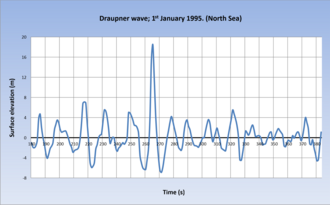
On January 1, 1995, at Unit E of the Draupner platform—a gas pipeline support structure situated in the North Sea approximately 160 kilometers southwest of Norway's southern tip—an unprecedented wave was recorded. This wave reached a staggering height of 25.6 meters (84 feet), far exceeding the typical wave heights expected in that region. Its detection provided concrete evidence that freak waves, once considered mere maritime folklore or rare anomalies, are real and can be measured accurately.
Understanding Freak Waves and Their Impact
Freak waves, also known as rogue waves, are unusually large and unexpected surface waves that can pose serious threats to ships, offshore platforms, and coastal structures. Unlike tsunamis, which are caused by seismic activity, freak waves arise from complex interactions of wind, currents, and wave patterns. The Draupner wave's measurement helped scientists validate theoretical models and improve safety standards for marine engineering.
Before the Draupner event, the existence of such massive waves was debated, as eyewitness accounts were often dismissed as exaggerations. The precise instrumentation on the Draupner platform changed that perception, confirming that freak waves can occur even in relatively moderate sea conditions.
The Legacy of the Draupner Wave in Modern Ocean Science
The detection of the Draupner wave has had lasting implications. It spurred extensive research into wave dynamics, leading to better predictive models and enhanced design criteria for offshore structures. Today, engineers incorporate the possibility of freak waves into their safety calculations, reducing the risk of catastrophic failures.
Moreover, the Draupner wave has captured the imagination of the scientific community and the public alike, symbolizing the ocean's unpredictable power. It serves as a reminder of the importance of continuous monitoring and advanced technology in understanding natural phenomena.
Why the Draupner Wave Matters for Maritime Safety and Climate Studies
Beyond engineering, studying freak waves like the Draupner wave contributes to broader climate and environmental research. Understanding wave behavior helps in modeling ocean-atmosphere interactions, which are crucial for weather forecasting and climate change predictions. As climate patterns shift, the frequency and intensity of extreme ocean events may also change, making the lessons learned from the Draupner wave more relevant than ever.
In summary, the Draupner wave is not just a historical measurement; it is a cornerstone in the ongoing quest to comprehend the ocean's mysteries and safeguard those who venture upon it.
The North Sea: A Vital Maritime Region in Europe
The North Sea is a remarkable body of water nestled between several key European countries: Great Britain, Denmark, Norway, Germany, the Netherlands, Belgium, and France. Positioned on the European continental shelf, this sea plays a crucial role in connecting the Atlantic Ocean to the heart of Europe. To the south, it links with the Atlantic through the English Channel, while to the north, it opens into the Norwegian Sea.
Stretching over an impressive length of more than 970 kilometres (600 miles) and spanning about 580 kilometres (360 miles) in width, the North Sea covers an expansive area of approximately 570,000 square kilometres (220,000 square miles). This vast maritime region is not only significant geographically but also economically and ecologically.
Geographical and Economic Importance
The North Sea serves as a major shipping route, facilitating trade and transportation between northern and western Europe. Its strategic location has made it a hub for commercial fishing, offshore oil and gas extraction, and renewable energy projects such as offshore wind farms. The sea’s rich natural resources have supported coastal communities for centuries, contributing to their cultural and economic development.
Ecological Significance and Environmental Concerns
Ecologically, the North Sea is home to diverse marine life, including various fish species, seabirds, and marine mammals. Its shallow waters and nutrient-rich environment create ideal conditions for marine biodiversity. However, the region faces environmental challenges such as pollution, overfishing, and the impacts of climate change, which threaten its delicate ecosystems.
Efforts are ongoing among bordering nations to promote sustainable management and conservation of the North Sea’s natural resources, balancing economic interests with environmental protection.
Historical and Cultural Context
Historically, the North Sea has been a crossroads of cultures and civilizations. From Viking explorations to medieval trade routes, it has shaped the history and heritage of the surrounding countries. Today, it continues to be a symbol of cooperation and shared stewardship among European nations.
Conclusion
In summary, the North Sea is much more than just a body of water between European countries. It is a dynamic and vital region that supports economic activity, sustains rich biodiversity, and holds deep historical significance. Understanding its multifaceted role helps appreciate why the North Sea remains a key focus for environmental, economic, and geopolitical interests in Europe.
Discover Norway: The Kingdom of Scenic Wonders and Nordic Heritage
Norway, officially known as the Kingdom of Norway, is a captivating Nordic country nestled on the Scandinavian Peninsula in Northern Europe. Beyond its mainland, Norway's territory extends to include the remote Arctic island of Jan Mayen and the fascinating Svalbard archipelago, both integral parts of the kingdom. Additionally, Norway administers Bouvet Island in the Subantarctic region as a dependency, while also laying claim to the Antarctic territories of Peter I Island and Queen Maud Land.
With a population of approximately 5.6 million people, Norway offers a unique blend of vibrant urban life and breathtaking natural landscapes. Oslo, the capital and largest city, serves as a cultural and economic hub, buzzing with history, modern architecture, and a strong connection to nature.
Covering a total area of 385,207 square kilometers (148,729 square miles), Norway boasts a diverse geography that ranges from rugged mountains and deep fjords to vast forests and arctic tundra. The country shares a lengthy eastern border with Sweden and is bordered by Finland and Russia to the northeast, creating a rich tapestry of cultural and natural influences.
Norway’s extensive coastline stretches along the Skagerrak strait, the North Atlantic Ocean, and the Barents Sea, making it famous for its stunning fjords, rich marine biodiversity, and vibrant fishing industry. This extensive shoreline also makes Norway a prime destination for outdoor enthusiasts interested in sailing, kayaking, and whale watching.
Known for its high quality of life, progressive social policies, and strong emphasis on environmental sustainability, Norway is often ranked among the best countries in the world for living standards. It also enjoys a robust economy fueled by natural resources such as oil, gas, hydropower, and minerals.
Whether you are drawn by the mesmerizing Northern Lights, the cultural richness of Oslo, or the pristine wilderness of its national parks, Norway offers an unforgettable experience that blends natural beauty with a deep-rooted history and modern innovation.
Understanding Rogue Waves: Nature's Unpredictable Giants
Rogue waves are massive, unexpected surface waves that pose significant danger to ships, offshore platforms, and isolated coastal structures like lighthouses. Unlike regular ocean waves, which follow predictable patterns, rogue waves appear suddenly and can tower over surrounding waves, making them especially hazardous for seafarers and coastal installations.
These waves are fundamentally different from tsunamis. While tsunamis are caused by underwater seismic activity—such as earthquakes or volcanic eruptions—and have very long wavelengths that often go unnoticed in deep waters, rogue waves are localized, short-lived phenomena that emerge without warning in open sea. Their formation is still a subject of ongoing scientific research, but factors such as wave interference, ocean currents, and wind conditions are believed to play crucial roles.
When rogue waves reach the shore, they are sometimes referred to as "sneaker waves." These shoreline rogue waves are notorious for their sudden appearance and immense power, often catching beachgoers off guard and causing dangerous conditions along coastlines.
Understanding rogue waves is essential not only for marine safety but also for the design of ships and offshore structures to withstand these unpredictable natural forces. Advances in oceanographic monitoring and predictive modeling continue to improve our ability to detect and prepare for rogue wave events, helping to protect lives and property on the oceans and coasts.
January 1: The Start of a New Year
January 1 marks the very first day of the calendar year in the widely used Gregorian calendar. It is famously celebrated as New Year's Day, symbolizing a fresh start and new beginnings for people around the world. On this day, 364 days remain until the year concludes, making it a pivotal moment for reflection, goal-setting, and celebration.
The Significance of New Year's Day
New Year's Day is more than just a date on the calendar; it carries deep cultural, social, and historical significance. Across many cultures, it is a time to leave behind the past year's challenges and embrace hope and optimism for the year ahead. Traditions often include fireworks, countdowns, resolutions, and gatherings with family and friends. This day serves as a universal marker of time, helping societies organize their activities, holidays, and fiscal years.
Why January 1? The History Behind the Date
The choice of January 1 as the start of the year dates back to the Roman calendar reforms. Julius Caesar introduced the Julian calendar in 45 BCE, setting January 1 as the beginning of the year to honor Janus, the Roman god of doors and beginnings. The Gregorian calendar, introduced in 1582 by Pope Gregory XIII, refined this system and is the calendar most of the world uses today. This continuity has helped January 1 maintain its status as the symbolic gateway to a new year.
How People Celebrate Around the World
New Year's Day celebrations vary widely but often share common themes of renewal and joy. In many countries, people watch spectacular fireworks displays at midnight, attend parties, or participate in cultural rituals meant to bring luck and prosperity. Some traditions include eating specific foods believed to bring good fortune, such as lentils in Italy or black-eyed peas in the southern United States. Others focus on quiet reflection or religious observances.
New Year's Resolutions: A Tradition of Self-Improvement
One of the most popular customs associated with January 1 is making New Year's resolutions. This practice involves setting personal goals to improve health, relationships, finances, or habits. It reflects the human desire for growth and positive change, using the symbolic fresh start of the new year as motivation.
SEO Tips for Content About January 1 and New Year's Day
When creating content about January 1 or New Year's Day, it’s important to use clear and descriptive headings to improve readability and SEO. Using header tags like <h2> for main sections helps search engines understand the structure and relevance of your content. Incorporate keywords naturally, such as "New Year's Day," "January 1 celebrations," and "history of New Year's Day," to attract users searching for related information. Engaging, humanized content that connects emotionally with readers will also boost user experience and search rankings.
In summary, January 1 is not just the first day of the year—it is a globally recognized symbol of renewal, hope, and cultural tradition. Whether through festive celebrations or quiet reflection, it invites everyone to embrace the possibilities of a new beginning.
Related Wikipedia articles
Draupner wave
1995 freak wave
The Draupner wave, also known as the New Year's wave or Draupner freak wave, was a rare freak wave that was the first to be detected by a measuring instrument. The wave, determined to be 25.6 m (84 ft) in height, was recorded on 1 January 1995 at Unit E of the Draupner platform,…Source: Wikipedia (CC BY-SA)
North Sea
Marginal sea of the Atlantic Ocean
The North Sea lies between Great Britain, Denmark, Norway, Germany, the Netherlands, Belgium, and France. A sea on the European continental shelf, it connects to the Atlantic Ocean through the English Channel in the south and the Norwegian Sea in the north. It is more than 970…Source: Wikipedia (CC BY-SA)
Norway
Country in Northern Europe
Norway, officially the Kingdom of Norway, is a Nordic country located on the Scandinavian Peninsula in Northern Europe. The remote Arctic island of Jan Mayen and the archipelago of Svalbard also form part of the Kingdom of Norway. Bouvet Island, located in the Subantarctic, is a…Source: Wikipedia (CC BY-SA)
Rogue wave
Unexpectedly large transient ocean surface wave
Rogue waves are large and unpredictable surface waves that can be extremely dangerous to ships and isolated structures such as lighthouses. They are distinct from tsunamis, which are long wavelength waves, often almost unnoticeable in deep waters and are caused by the…Source: Wikipedia (CC BY-SA)
January 1
Day of the year
January 1 is the first day of the calendar year in the Gregorian Calendar; 364 days remain until the end of the year. This day is also known as New Year's Day since the day marks the beginning of the year.Source: Wikipedia (CC BY-SA)