Thai Criminal Code Strengthens Lèse-majesté Law
The revised Thai criminal code came into force, strengthening the law on lèse-majesté in Thailand to include insult and treating it as a crime against national security.
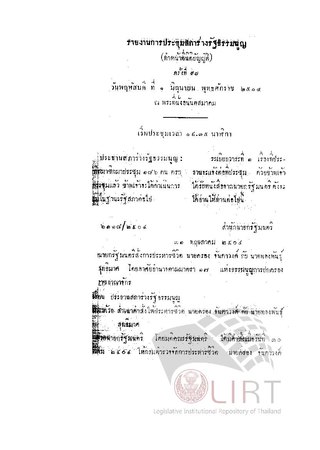
On January 1, 1957, Thailand's revised criminal code came into force, marking a significant strengthening of its lèse-majesté laws. This update redefined insult and threats against the monarchy as crimes against national security, reflecting a unique approach to royal defamation among constitutional monarchies.
Background of Lèse-majesté in Thailand
The concept of lèse-majesté, which prohibits defaming, insulting, or threatening the monarchy, has a long history in Thailand. Modern lèse-majesté law has been part of the Thai Criminal Code since 1908. This legal framework protects not only the king and queen but also the heir to the throne and the regent.
Thailand stands apart as the only constitutional monarchy that has reinforced its lèse-majesté laws since the end of the Second World War. The existing penalties are severe, with potential prison sentences ranging from three to fifteen years for each offense. These have led to descriptions of the law as the "world's harshest lèse majesté law" and "possibly the strictest criminal-defamation law anywhere."
The 1957 Code Revision and National Security
The revision of the Thai criminal code on January 1, 1957, specifically broadened the scope of lèse-majesté. It officially incorporated the act of insult, by any means of expression, and classified it as a crime against national security. This classification elevated the offense beyond a personal slight to a matter impacting the state's stability.
National security, originally focused on defense against military threats, now encompasses a wider array of concerns including terrorism, crime, economic stability, and more. By linking lèse-majesté to national security, the Thai government framed the protection of the monarchy as essential for the overall safety and integrity of the nation.
Significance of the Legal Changes
The strengthening of lèse-majesté laws in 1957 underscored the Thai government's commitment to protecting the monarchy. The enforcement of these laws has been described as being "in the interest of the palace," indicating a close alignment between legal protections and royal authority.
This legal development highlights Thailand's distinctive position among constitutional monarchies, particularly its post-WWII approach to safeguarding royal dignity through stringent criminal statutes. The classification of insult as a national security issue further solidified the legal framework surrounding the monarchy's position within the state.
Key facts
- On January 1, 1957, Thailand's revised criminal code came into effect.
- The revised code strengthened laws against lèse-majesté, including insult and threats to the monarchy.
- Insult and threats against the Thai monarchy were classified as crimes against national security.
- Modern Thai lèse-majesté law has existed since 1908.
- Thailand is the only constitutional monarchy to have strengthened its lèse-majesté law since World War II.
Frequently asked questions
What is lèse-majesté?
Lèse-majesté is a legal concept that prohibits defaming, insulting, or threatening a monarch. In Thailand, it is codified in Section 112 of the Criminal Code and applies to the king, queen, heir, or regent.
Why was the 1957 revision significant?
The 1957 revision significantly strengthened lèse-majesté laws by including insult as a crime and explicitly classifying it as an offense against national security. This marked a unique post-WWII reinforcement of such laws among constitutional monarchies.
What are the penalties for lèse-majesté in Thailand?
Penalties for lèse-majesté in Thailand can range from three to fifteen years imprisonment for each count, making it one of the strictest criminal-defamation laws globally.
Written with AI assistance, based on the Wikipedia sources listed below.
Related Wikipedia articles
Lèse-majesté in Thailand
In Thailand, lèse-majesté is a crime according to Section 112 of the Thai Criminal Code, which makes it illegal to defame, insult, or threaten the king of Thailand, the queen of Thailand, the heir to the throne of Thailand, or the regent of Thailand. Modern Thai lèse-majesté law…Source: Wikipedia (CC BY-SA)
Insult (legal)
Infringement of another human's honor
Insult is the infringement of another human's honor by whatsoever means of expression, in particular an offensive statement or gesture communicated, and is a crime in some countries. In a few countries seen as the same, in most the distinction between insult and defamation is…Source: Wikipedia (CC BY-SA)
National security
Security and defence of a nation state
National security, or national defence, is the security and defence of a sovereign state, including its citizens, economy, and institutions, which is regarded as a duty of government. Originally conceived as protection against military attack, national security is widely…Source: Wikipedia (CC BY-SA)