Soviet Luna 1 Launch on January 2, 1959
The Soviet Luna 1, the first spacecraft to reach the vicinity of the Moon, was launched by a Vostok rocket from the Baikonur Cosmodrome.
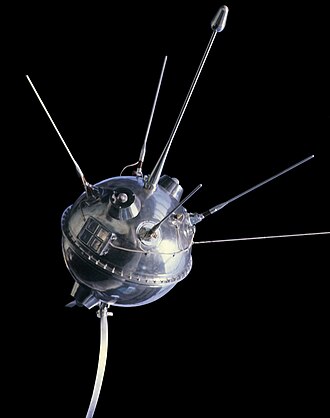
On January 2 1959 the Soviet Union launched Luna 1, the first spacecraft to approach the Moon and the first to leave Earth orbit. The mission marked a major step in space exploration, showing that a probe could travel beyond Earth and reach another celestial body.
Background of the Luna Programme
Luna 1, also called Mechta, was part of the Soviet Luna programme that aimed to send probes to the Moon. The spacecraft was built to impact the lunar surface, but its trajectory took it past the Moon instead.
The mission used a Vostok rocket, a launch vehicle derived from the R‑7 Semyorka ICBM. Vostok rockets had already placed the first artificial satellite and the first crewed spacecraft into orbit, establishing a reliable launch system for Soviet space goals.
Launch from Baikonur Cosmodrome
The launch took place at the Baikonur Cosmodrome, a large spaceport in Kazakhstan operated by Russia. Baikonur had become the primary site for Soviet launches, providing the infrastructure needed for heavy rockets like Vostok.
On the morning of January 2 1959 the Vostok rocket lifted Luna 1 toward the Moon, beginning a flight that would break several records.
Mission Achievements and Significance
Luna 1 became the first spacecraft to reach the vicinity of Earth's Moon, the first to leave Earth orbit, and the first to be placed in a heliocentric (solar) orbit after passing the Moon.
These milestones demonstrated that humanity could send objects beyond Earth’s gravitational pull, paving the way for later lunar impactors, orbiters, and eventually crewed missions.
Key facts
- Launch date: January 2 1959.
- Spacecraft: Luna 1 (Mechta, E‑1 No.4).
- Launch vehicle: Vostok rocket, derived from the R‑7 ICBM.
- Launch site: Baikonur Cosmodrome in Kazakhstan.
- First probe to reach Moon’s vicinity and enter solar orbit.
Frequently asked questions
What was Luna 1 originally intended to do?
It was designed to impact the Moon, but its trajectory missed the lunar surface and continued into a solar orbit.
Why was the Vostok rocket important for this mission?
The Vostok family provided the thrust and reliability needed to send a spacecraft beyond Earth orbit, building on earlier successes with satellites and crewed flights.
How did the launch location contribute to the mission?
Baikonur Cosmodrome offered the large launch facilities and geographic position required for high‑energy missions like Luna 1.
Written with AI assistance, based on the Wikipedia sources listed below.
Related Wikipedia articles
Luna 1
Soviet spacecraft
Luna 1, also known as Mechta, E-1 No.4 and First Lunar Rover, was the first spacecraft to reach the vicinity of Earth's Moon, the first spacecraft to leave Earth's orbit, and the first to be placed in heliocentric orbit. Intended as a Moon impactor, Luna 1 was launched as part…Source: Wikipedia (CC BY-SA)
Vostok (rocket family)
Series of six manned and unmanned Soviet orbiting spacecraft
Vostok was a family of rockets derived from the Soviet R-7 Semyorka ICBM and was designed for the human spaceflight programme. This family of rockets launched the first artificial satellite and the first crewed spacecraft (Vostok) in human history. It was a subset of the R-7…Source: Wikipedia (CC BY-SA)
Baikonur Cosmodrome
Spaceport in Kazakhstan leased to Russia
The Baikonur Cosmodrome is a spaceport operated by Russia within Kazakhstan. Located in the Kazakh city of Baikonur, it is the largest operational space launch facility in terms of area. All Russian crewed spaceflights are launched from Baikonur.Source: Wikipedia (CC BY-SA)