French Revolution: After being found guilty of high treason by the National Convention, Louis XVI was guillotined in Paris.
French Revolution
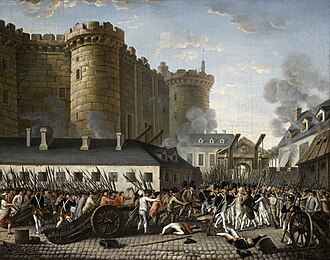
The French Revolution was a period of political and societal change in France which began with the Estates General of 1789 and ended with the Coup of 18 Brumaire on 9 November 1799. Many of the revolution's ideas are considered fundamental principles of liberal democracy, and its values remain central to modern French political discourse. It was caused by a combination of social, political, and economic factors which the existing regime proved unable to manage.
National Convention
The National Convention was the constituent assembly of the Kingdom of France for one day and the French First Republic for its first three years during the French Revolution, following the two-year National Constituent Assembly and the one-year Legislative Assembly. Created after the insurrection of 10 August 1792, it was the first French government organized as a republic, abandoning the monarchy altogether. The Convention sat as a single-chamber assembly from 20 September 1792 to 26 October 1795.
Louis XVI
Louis XVI was the last king of France before the fall of the monarchy during the French Revolution. The son of Louis, Dauphin of France, and Maria Josepha of Saxony, Louis became the new Dauphin when his father died in 1765. In 1770, he married Marie Antoinette. He became King of France and Navarre on his grandfather's death on 10 May 1774, and reigned until the abolition of the monarchy on 21 September 1792. From 1791 onwards, he used the style of king of the French.
Execution of Louis XVI
Louis XVI, former Bourbon King of France since the abolition of the monarchy, was publicly executed on 21 January 1793 during the French Revolution at the Place de la Révolution in Paris. At his trial four days prior, the National Convention had convicted the former king of high treason in a near-unanimous vote; while no one voted "not guilty", several deputies abstained. Ultimately, they condemned him to death by a simple majority. The execution by guillotine was performed by Charles-Henri Sanson, then High Executioner of the French First Republic and previously royal executioner under Louis.