births
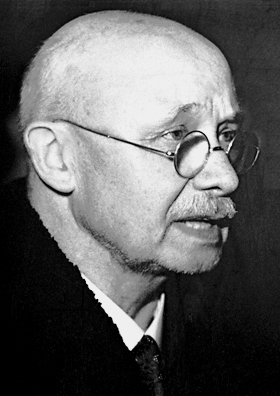
Otto Paul Hermann Diels was a German chemist. His most notable work was done with Kurt Alder on the Diels–Alder reaction, a method for cyclohexene synthesis. The pair was awarded the Nobel Prize in Chemistry in 1950 for their work. Their method of synthesizing cyclic organic compounds proved valuable for the manufacture of synthetic rubber and plastic. He completed his education at the University of Berlin, where he later worked. Diels was employed at the University of Kiel when he completed his Nobel Prize-winning work, and remained there until he retired in 1945. Diels was married, with five children. He died in 1954.
The Nobel Prize in Chemistry is awarded annually by the Royal Swedish Academy of Sciences to scientists in the various fields of chemistry. It is one of the five Nobel Prizes established by the will of Alfred Nobel in 1895, awarded for outstanding contributions in chemistry, physics, literature, peace, and physiology or medicine. This award is administered by the Nobel Foundation and awarded by the Royal Swedish Academy of Sciences on proposal of the Nobel Committee for Chemistry, which consists of five members elected by the Academy. The award is presented in Stockholm at an annual ceremony on December 10th, the anniversary of Nobel's death.