Rebels led by John Chilembwe attacked local plantation owners, beginning an uprising regarded as a key moment in the history of Malawi.
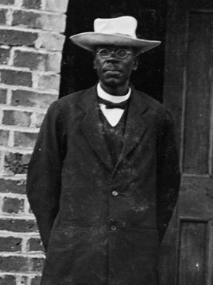
John Chilembwe
John Chilembwe was a Baptist pastor, educator and revolutionary who trained as a minister in the United States, returning to Nyasaland in 1901. He was an early figure in the resistance to colonialism in Nyasaland (Malawi), opposing both the treatment of Africans working in agriculture on European-owned plantations and the colonial government's failure to promote the social and political advancement of Africans. Soon after the outbreak of the First World War, Chilembwe organised an unsuccessful armed uprising against colonial rule. Today, Chilembwe is celebrated as a hero of independence in some African countries, and John Chilembwe Day is observed annually on 15 January in Malawi.
Chilembwe uprising
The Chilembwe uprising was a rebellion against British colonial rule in Nyasaland which took place in January 1915. It was led by John Chilembwe, an American-educated Baptist minister. Based around his church in the village of Mbombwe in the south-east of the colony, the leaders of the revolt were mainly from an emerging black middle class. They were motivated by grievances against the British colonial system, which included forced labour, racial discrimination and new demands imposed on the African population following the outbreak of World War I.