events
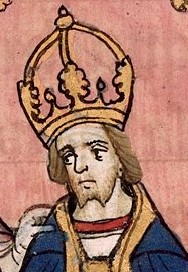
Henry VII, also known as Henry of Luxembourg, was Count of Luxembourg, King of Germany from 1308 and Holy Roman Emperor from 1312. He was the first emperor of the House of Luxembourg. During his brief career he reinvigorated the imperial cause in Italy, which was racked with the partisan struggles between the divided Guelph and Ghibelline factions, and inspired the praise of Dino Compagni and Dante Alighieri. He was the first emperor since the death of Frederick II in 1250, ending the Great Interregnum of the Holy Roman Empire; however, his premature death threatened to undo his life's work. His son, John of Bohemia, failed to be elected as his successor, and there was briefly another anti-king, Frederick the Fair, contesting the rule of Louis IV.
King of the Romans was the title used by the king of East Francia following his election by the princes from the reign of Henry II (1002–1024) onward.
Pope Clement V, born Raymond Bertrand de Got, was head of the Catholic Church and ruler of the Papal States from 5 June 1305 to his death, in April 1314. He is remembered for suppressing the order of the Knights Templar and allowing the execution of many of its members. A Frenchman by birth, Clement moved the Papacy from Rome to Avignon, ushering in the period known as the Avignon Papacy.