Battle of Adrianople: Constantine I defeats Licinius, who flees to Byzantium.
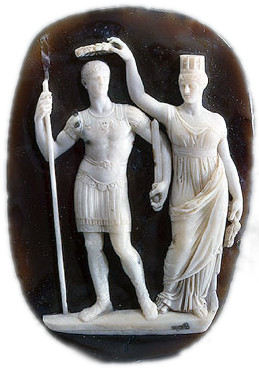
Battle of Adrianople (324)
The Battle of Adrianople was fought in Thrace on July 3, 324, during a Roman civil war, the second to be waged between the two emperors Constantine I and Licinius. Licinius was soundly defeated and his army suffered heavy casualties. Constantine built up military momentum, winning further battles on land and sea, eventually leading to the final defeat of Licinius at Chrysopolis.
Constantine the Great
Constantine I, also known as Constantine the Great, was a Roman emperor from AD 306 to 337 and the first Roman emperor to convert to Christianity. He played a pivotal role in elevating the status of Christianity in Rome, decriminalising Christian practice and ceasing Christian persecution. This was a turning point in the Christianisation of the Roman Empire. He founded the city of Constantinople and made it the capital of the Empire, which it remained for over a millennium.
Licinius
Valerius Licinianus Licinius was Roman emperor from 308 to 324. For most of his reign, he was the colleague and rival of Constantine I, with whom he co-authored the Edict of Milan that granted official toleration to Christians in the Roman Empire. He was finally defeated at the Battle of Chrysopolis, and was later executed on the orders of Constantine.
Byzantium
Byzantium or Byzantion was an ancient Greek city in classical antiquity that became known as Constantinople in late antiquity and Istanbul today. The Greek name Byzantion and its Latinization Byzantium continued to be used as a name of Constantinople sporadically and to varying degrees during the thousand-year existence of the Eastern Roman Empire, which also became known by the former name of the city as the Byzantine Empire. Byzantium was colonized by Greeks from Megara in the 7th century BCE and remained primarily Greek-speaking until its conquest by the Ottoman Empire in 1453 CE.