James Black, Scottish pharmacologist and academic, Nobel Prize laureate (died 2010)
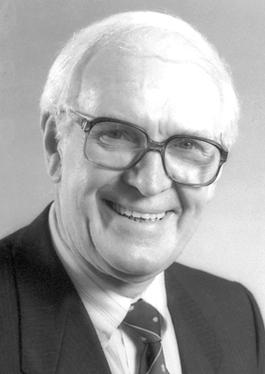
James Black (pharmacologist)
Sir James Whyte Black was a Scottish physician and pharmacologist. Together with Gertrude B. Elion and George H. Hitchings, he shared the Nobel Prize for Medicine in 1988 for pioneering strategies for rational drug-design, which, in his case, led to the development of propranolol and cimetidine. Black established a Veterinary Physiology department at the University of Glasgow, where he became interested in the effects of adrenaline on the human heart. He went to work for ICI Pharmaceuticals in 1958 and, while there, developed propranolol, a beta blocker used for the treatment of heart disease. Black was also responsible for the development of cimetidine, an H2 receptor antagonist, a drug used to treat stomach ulcers.
Nobel Prize in Physiology or Medicine
The Nobel Prize in Physiology or Medicine is awarded yearly by the Nobel Assembly at the Karolinska Institute for outstanding discoveries in physiology or medicine. The Nobel Prize is not a single prize, but five separate prizes that, according to Alfred Nobel's 1895 will, are awarded "to those who, during the preceding year, have conferred the greatest benefit to humankind". Nobel Prizes are awarded in the fields of Physics, Medicine or Physiology, Chemistry, Literature, and Peace.