The Royal Welch Fusiliers (cap badge pictured), one of the oldest line-infantry regiments of the British Army, was founded.
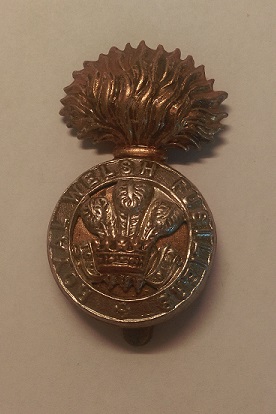
Royal Welch Fusiliers
The Royal Welch Fusiliers (Welsh: Ffiwsilwyr Brenhinol Cymreig) was a line infantry regiment of the British Army, and part of the Prince of Wales's Division, that was founded in 1689, shortly after the Glorious Revolution. In 1702, it was designated a fusilier regiment and became the Welch Regiment of Fusiliers; the prefix "Royal" was added in 1713, then confirmed in 1714 when George I named it the Prince of Wales's Own Royal Regiment of Welsh Fusiliers. In 1751, after reforms that standardised the naming and numbering of regiments, it became the 23rd Regiment of Foot (Royal Welsh Fuzileers). In 1881, the final title of the regiment was adopted.
Line infantry
Line infantry was the type of infantry that formed the bulk of most European land armies from the mid-17th century to the mid-19th century. Maurice of Nassau and Gustavus Adolphus are generally regarded as its pioneers, while Turenne and Montecuccoli are closely associated with the post-1648 development of linear infantry tactics. For both battle and parade drill, it consisted of two to four ranks of foot soldiers drawn up side by side in rigid alignment, and thereby maximizing the effect of their firepower. By extension, the term came to be applied to the regular regiments "of the line" as opposed to light infantry, skirmishers, militia, support personnel, plus some other special categories of infantry not focused on heavy front line combat.
British Army
The British Army is the principal land warfare force of the United Kingdom. As of 1 January 2025, the British Army comprises 73,847 regular full-time personnel, 4,127 Gurkhas, 25,742 volunteer reserve personnel and 4,697 "other personnel", for a total of 108,413.