According to the Anglo-Saxon Chronicle, King Æthelberht II of East Anglia was beheaded on the orders of Offa of Mercia.
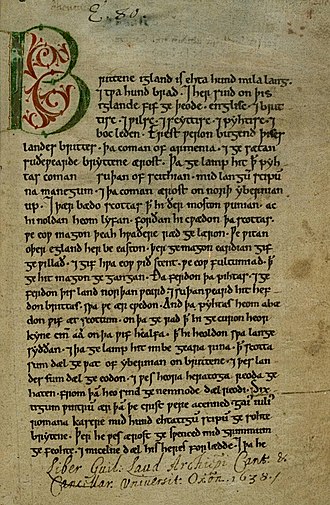
Anglo-Saxon Chronicle
The Anglo-Saxon Chronicle is a collection of annals in Old English, chronicling the history of the Anglo-Saxons.
Æthelberht II of East Anglia
Æthelberht, also called Saint Ethelbert the King was an 8th-century saint and a king of East Anglia, the Anglo-Saxon kingdom which today includes the English counties of Norfolk and Suffolk. Little is known of his reign, which may have begun in 779, according to later sources, and very few of the coins he issued have been discovered. It is known from the Anglo-Saxon Chronicle that he was killed on the orders of Offa of Mercia in 794.
Kingdom of East Anglia
The Kingdom of the East Angles, informally known as the Kingdom of East Anglia, was a small independent kingdom of the Angles during the Anglo-Saxon period comprising what are now the English counties of Norfolk and Suffolk and perhaps the eastern part of the Fens; the area still known as East Anglia.
Offa of Mercia
Offa was King of Mercia, a kingdom of Anglo-Saxon England, from 757 until his death in 796. The son of Thingfrith and a descendant of Eowa, Offa came to the throne after a period of civil war following the assassination of Æthelbald. Offa defeated the other claimant, Beornred. In the early years of Offa's reign, it is likely that he consolidated his control of Midland peoples such as the Hwicce and the Magonsæte. Taking advantage of instability in the kingdom of Kent to establish himself as overlord, Offa also controlled Sussex by 771, though his authority did not remain unchallenged in either territory. In the 780s he extended Mercian Supremacy over most of southern England, allying with Beorhtric of Wessex, who married Offa's daughter Eadburh, and regained complete control of the southeast. He also became the overlord of East Anglia and had King Æthelberht II of East Anglia beheaded in 794, perhaps for rebelling against him.