King John of England and King Philip II of France sign the Treaty of Le Goulet.
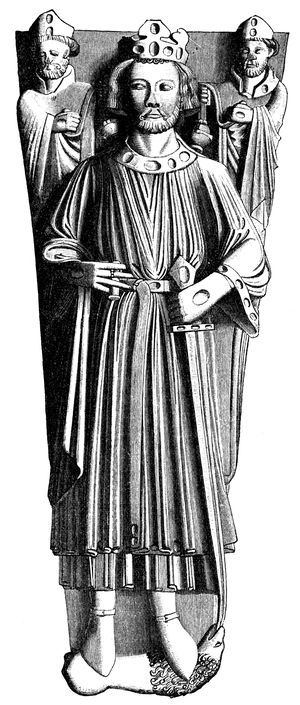
John, King of England
John was King of England from 1199 until his death in 1216. He lost the Duchy of Normandy and most of his other French lands to King Philip II of France, resulting in the collapse of the Angevin Empire and contributing to the subsequent growth in power of the French Capetian dynasty during the 13th century. The baronial revolt at the end of John's reign led to the sealing of Magna Carta, a document considered a foundational milestone in English and later British constitutional history.
Philip II of France
Philip II, also known as Philip Augustus, was King of France from 1180 to 1223. His predecessors had been known as kings of the Franks, but from 1190 onward, Philip became the first French monarch to style himself "King of France". The son of King Louis VII and his third wife, Adela of Champagne, he was originally nicknamed 'God-given' because he was a first son and born late in his father's life. Philip was given the epithet "Augustus" by the chronicler Rigord for having extended the crown lands of France so remarkably.
Treaty of Le Goulet
The Treaty of Le Goulet was a treaty signed by King John of England and King Philip II of France in May 1200. It ended the first succession war following Richard I’s death, temporarily settling territorial disputes over Normandy and recognizing John as the rightful heir and King of England. The peace held until Philip's invasion of Normandy in 1202, which led to continental Normandy formal annexation to the crown lands of France.