The 1958 riots in Ceylon become a watershed in the race relations of various ethnic communities of Sri Lanka. The total deaths are estimated at 300, mostly Tamils.
1958 anti-Tamil pogrom
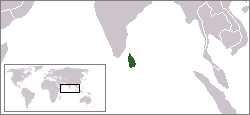
The 1958 anti-Tamil pogrom and riots in Ceylon, also known as the 58 riots, refer to the first island-wide ethnic riots and pogrom to target the minority Tamils in the Dominion of Ceylon after it became an independent dominion from Britain in 1948. The riots lasted from 22 May until 29 May 1958 although sporadic disturbances happened even after the declaration of emergency on 27 May 1958. The estimates of the murders range, based on recovered bodies, from 158 to 1,500. Although most of the victims were Tamils, Sinhalese and their property were also affected by retaliatory attacks by Tamil mobs throughout the Batticaloa and Jaffna districts. As the first full-scale race riot in the country in over forty years, the events of 1958 shattered the trust the communities had in one another and led to further polarisation.
Tamils
The Tamils, also known by their endonym Tamilar, are a Dravidian ethnic group who natively speak the Tamil language and trace their ancestry mainly to the southern part of the Indian subcontinent. The Tamil language is one of the longest-surviving classical languages, with over two thousand years of written history, dating back to the Sangam period. Tamils constitute about 5.7% of the Indian population and form the majority in the South Indian state of Tamil Nadu and the union territory of Puducherry. They also form significant proportions of the populations in Sri Lanka (15.3%), Malaysia (7%) and Singapore (5%). Tamils have migrated world-wide since the 19th century CE and a significant population exists in South Africa, Mauritius, Fiji, as well as other regions such as the Southeast Asia, Middle East, Caribbean and parts of the Western World.