Joe Brown and George Band, members of the British Kangchenjunga expedition, made the first ascent of the world's third-highest mountain but deliberately did not set foot on the summit.
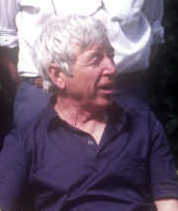
Joe Brown (climber)
Joseph Brown was an English mountaineer who was regarded as an outstanding pioneer of rock climbing during the 1950s and early 1960s. Together with his early climbing partner, Don Whillans, he was one of a new breed of British post-war climbers who came from working class backgrounds in contrast to the upper and middle class professionals who had dominated the sport up to the Second World War. He became the first person to climb the third-highest mountain in the world when he was on the 1955 British Kangchenjunga expedition. Some of his climbs were televised and he assisted with mountaineering scenes in several films; Brown died on 15 April 2020 at the age of 89.
George Band
George Christopher Band was an English mountaineer. He was the youngest climber on the 1953 British expedition to Mount Everest on which Edmund Hillary and Tenzing Norgay became the first to ascend the mountain. In 1955, he and Joe Brown were the first climbers to ascend Kangchenjunga, the third highest mountain in the world.
1955 British Kangchenjunga expedition
The 1955 British Kangchenjunga expedition succeeded in climbing the 28,168-foot (8,586 m) Kangchenjunga, the third highest mountain in the world, for the first time. The expedition complied with a request from the Sikkim authorities that the summit should not be trodden on so the climbers deliberately stopped about five feet below the summit. George Band and Joe Brown reached the top on 25 May 1955, and they were followed the next day by Norman Hardie and Tony Streather. The expedition was led by Charles Evans who had been deputy leader on the 1953 British Mount Everest expedition.
Kangchenjunga
Kangchenjunga is the third-highest mountain in the world. Its summit lies at 8,586 m (28,169 ft) in a section of the Himalayas, the Kangchenjunga Himal, which is bounded in the west by the Tamur River, in the north by the Lhonak River and Jongsang La, and in the east by the Teesta River. It lies in the border region between Koshi Province of Nepal and Sikkim state of India, with the West and Kangbachen peaks located in Nepal's Taplejung District and the Main, Central and South peaks directly on the border.