Sailors on board Brazil's warships including the Minas Gerais, São Paulo, and Bahia, violently rebel in what is now known as the Revolta da Chibata (Revolt of the Lash).
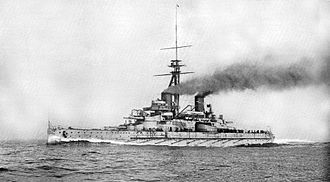
Brazilian battleship Minas Geraes
Minas Geraes, spelled Minas Gerais in some sources, was a dreadnought battleship of the Brazilian Navy. Named in honor of the state of Minas Gerais, the ship was laid down in April 1907 as the lead ship of its class, making the country the third to have a dreadnought under construction and igniting a naval arms race between Brazil, Argentina, and Chile.
Brazilian battleship São Paulo
São Paulo was a dreadnought battleship of the Brazilian Navy. It was the second of two ships in the Minas Geraes class, and was named after the state and city of São Paulo.
Brazilian cruiser Bahia
Bahia was the lead ship of a two-vessel class of cruisers built for Brazil by the British company Armstrong Whitworth. Crewmen mutinied in November 1910 aboard Bahia, Deodoro, Minas Geraes, and São Paulo, beginning the four-day Revolta da Chibata. Brazil's capital city of Rio de Janeiro was held hostage by the possibility of a naval bombardment, leading the government to give in to the rebel demands which included the abolition of flogging in the navy. During the First World War, Bahia and its sister ship Rio Grande do Sul were assigned to the Divisão Naval em Operações de Guerra, the Brazilian Navy's main contribution in that conflict. The squadron was based in Sierra Leone and Dakar and escorted convoys through an area believed to be heavily patrolled by U-boats.
Revolt of the Lash
The Revolt of the Lash was a naval mutiny in Rio de Janeiro, Brazil, in late November 1910. It was the direct result of the use of whips ("lashes") by white naval officers when punishing Afro-Brazilian and mixed-race enlisted sailors.