selected
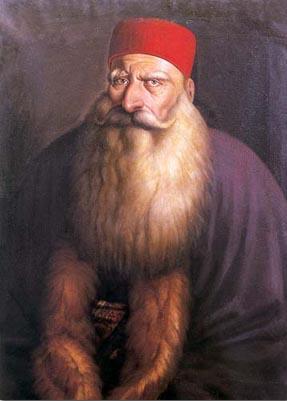
Bashir Shihab II (pictured) surrendered to the Ottoman Empire and was removed as Emir of Mount Lebanon after an imperial decree by Sultan Abdülmecid I.
Related Wikipedia articles
Bashir Shihab II
Emir of Lebanon (1767–1850)
Bashir Shihab II was a Lebanese emir who ruled the Emirate of Mount Lebanon in the first half of the 19th century. Born to a branch of the Shihab family which had converted from Sunni Islam, the religion of previous Shihabi emirs, he was the only Maronite ruler of the Mount…Source: Wikipedia (CC BY-SA)
Ottoman Empire
Turkish empire (c. 1299–1922)
The Ottoman Empire, also called the Turkish Empire, was an imperial realm that controlled much of Southeast Europe, West Asia, and North Africa from the 14th to early 20th centuries; it also controlled parts of southeastern Central Europe, between the early 16th and early 18th…Source: Wikipedia (CC BY-SA)
Emirate of Mount Lebanon
Former country
The Emirate of Mount Lebanon was a part of Mount Lebanon that enjoyed variable degrees of partial autonomy under the stable suzerainty of the Ottoman Empire between the mid-16th and the early-19th century.Source: Wikipedia (CC BY-SA)
Firman
Royal mandate or decree issued by a sovereign in an Islamic state
A firman, at the constitutional level, was a royal mandate or decree issued by a sovereign in an Islamic state. During various periods such firmans were collected and applied as traditional bodies of law. The English word firman comes from the Persian farmān meaning "decree" or…Source: Wikipedia (CC BY-SA)
Abdülmecid I
Sultan of the Ottoman Empire from 1839 to 1861
Abdülmecid I was the 31st sultan of the Ottoman Empire. He succeeded his father Mahmud II on 2 July 1839. His reign was notable for the rise of nationalist movements within the empire's territories.Source: Wikipedia (CC BY-SA)