Franco-Prussian War: The siege of Paris begins. The city held out for over four months before surrendering.
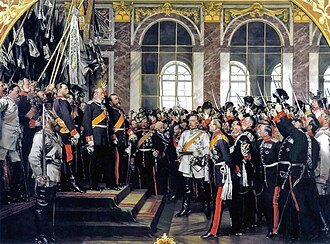
Franco-Prussian War
The Franco-Prussian War or Franco-German War, often referred to in France as the War of 1870, was a conflict between the Second French Empire and the North German Confederation led by the Kingdom of Prussia. Lasting from 19 July 1870 to 28 January 1871, the conflict was caused primarily by France's determination to reassert its dominant position in continental Europe, which appeared in question following the decisive Prussian victory over Austria in 1866.
Siege of Paris (1870–1871)
The siege of Paris took place from 19 September 1870 to 28 January 1871 and ended in the capture of the city by forces of the various states of the North German Confederation, led by the Kingdom of Prussia. The siege was the culmination of the Franco-Prussian War, which saw the Second French Empire attempt to reassert its dominance over continental Europe by declaring war on the North German Confederation. The Prussian-dominated North German Confederation had recently emerged victorious in the Austro-Prussian War of 1866, which led to the questioning of France's status as the dominant power of continental Europe. With a declaration of war by the French parliament on 16 July 1870, Imperial France soon faced a series of defeats at German hands over the following months, leading to the Battle of Sedan, which, on 2 September 1870, saw a decisive defeat of French forces and the capture of the French emperor, Napoleon III.